
snake plants for office
Snake Plant (Sansevieria) can suit a commercial workplace with inconsistent daylight. Its upright growth fits reception areas, conference rooms, corridors, and shared amenity spaces without narrowing walkways. A successful installation still depends on light, temperature, airflow, irrigation, and the building’s facility requirements.
Key Takeaways
- Snake Plant (Sansevieria) can suit a commercial workplace with inconsistent daylight.
- Its upright growth fits reception areas, conference rooms, corridors, and shared amenity spaces without narrowing walkways.
- A successful installation still depends on light, temperature, airflow, irrigation, and the building’s facility requirements.
What are snake plants for office spaces?
Snake plants are known for stiff, sword-shaped leaves and an upright habit. Their narrow profile adds height without extending far into a walkway, making them useful in busy commercial interiors where circulation, accessibility, and sightlines matter. The plant can tolerate irregular watering schedules, a trait that makes it well suited to workplaces where maintenance visits may occur on a two-week or four-week cycle rather than daily attention.
Several named cultivars offer different sizes and appearances for commercial settings. Sansevieria trifasciata ‘Laurentii’ features yellow margins along dark green leaves with light green cross-banding, reaching three to four feet at maturity. ‘Moonshine’ produces wider, silvery-green leaves that brighten low-light corners. ‘Hahnii’ (bird’s nest snake plant) stays under eight inches tall, making it ideal for desk placements, reception counters, and conference room tables. For taller installations, Sansevieria angolensis (cylindrical snake plant) produces round, spear-like leaves that can reach five feet or more, creating a sculptural focal point in lobbies and open-plan workstations.
They tolerate lower light than many indoor species, but “no light” requires a precise definition. A room without windows may still receive useful illumination from ceiling fixtures, glass walls, adjacent rooms, or supplemental horticultural lighting. A room with no usable light at all cannot support continued growth, so a site assessment should confirm conditions before installation. Light levels below approximately 50 foot-candles will sustain a snake plant for extended periods, though growth will slow considerably. North-facing windows, fluorescent office lighting, and LED panels typically provide enough energy to keep specimens healthy. South- and west-facing exposures produce stronger growth but may require the plant to be positioned several feet from the glass to prevent leaf scorch.
Watering is guided by the container, growing medium, drainage, temperature, light exposure, and humidity. The medium should dry between waterings because saturated soil can damage the roots. Scheduled maintenance keeps moisture checks, dust removal, pest monitoring, pruning, and replacement needs from becoming the facilities team’s responsibility. In a typical Northern California office environment, a snake plant in a 10-inch grow pot with well-draining soil may need water every two to three weeks during summer and every four to six weeks in winter. Overwatering is the single most common cause of snake plant decline in commercial settings. Our trained technicians use moisture meters and visual inspection to confirm dryness before each watering, which prevents root rot and keeps foliage firm.
Temperature and humidity in most office buildings suit snake plants well. They prefer temperatures between 60 and 85 degrees Fahrenheit, which aligns with standard commercial HVAC settings. Humidity is rarely a concern because snake plants originate from arid West African regions and adapt to dry indoor air. Facilities teams should note that cold drafts from exterior doors, loading docks, or overactive air conditioning vents can cause leaf damage. Positioning plants away from these trouble spots is part of the site assessment process during every Office Plants consultation.
What benefits can snake plants provide in an office?
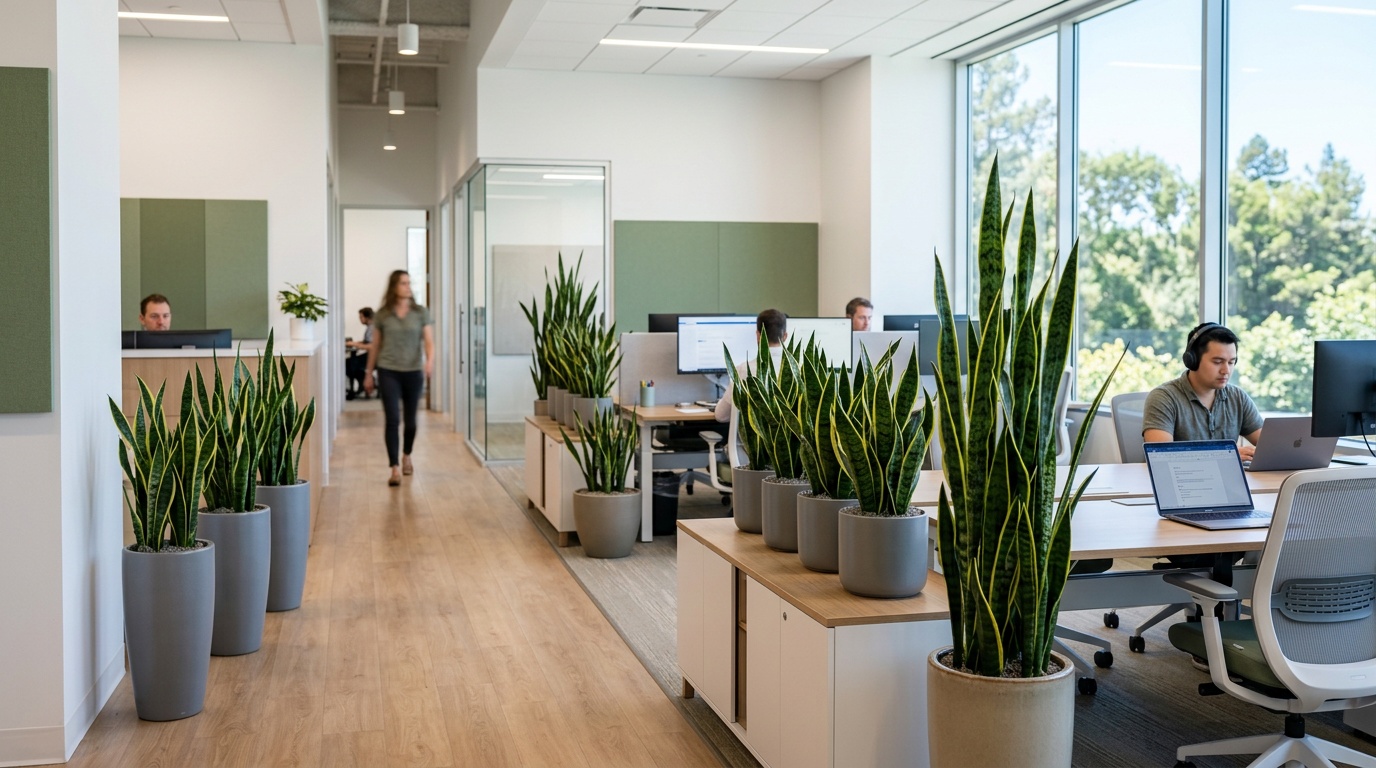

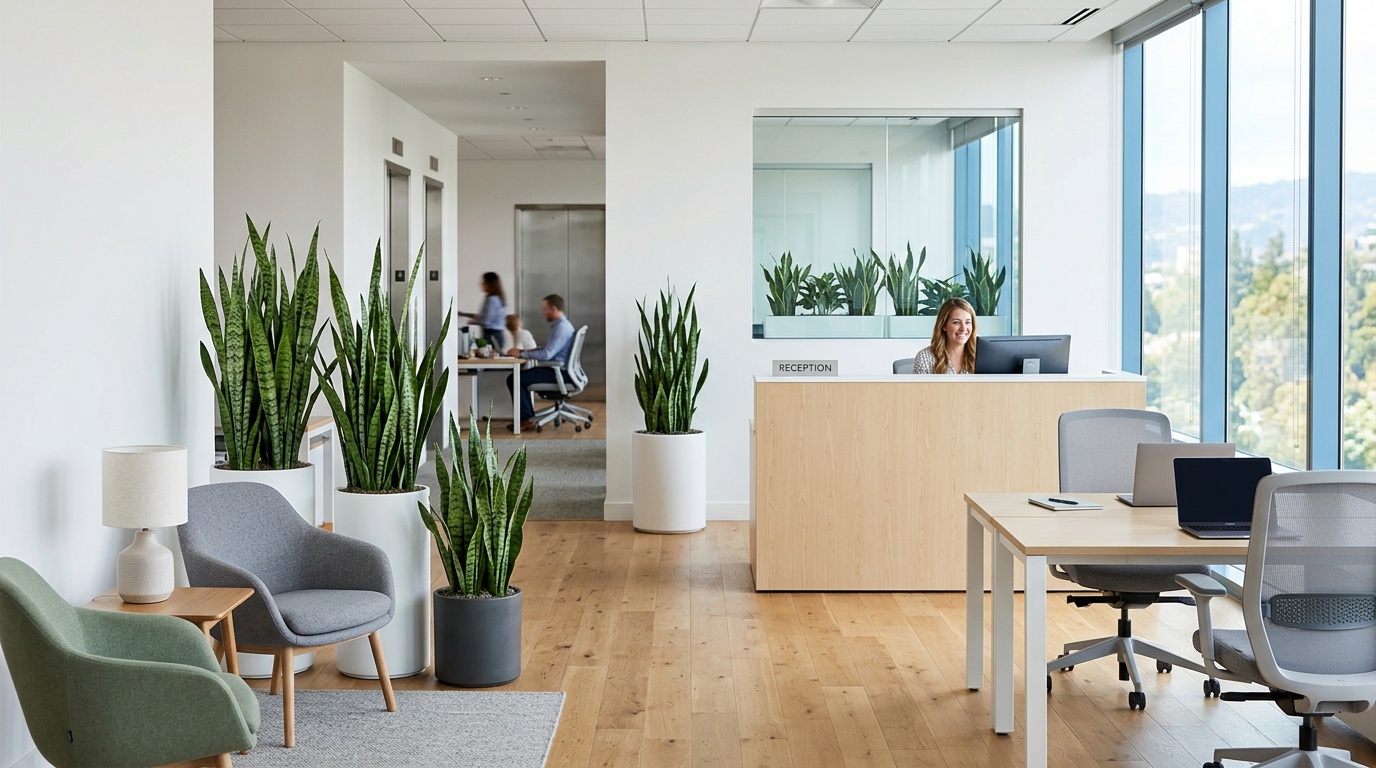
Snake plants add visual definition while using relatively little floor space. They can work near elevator lobbies, private offices, reception counters, and meeting rooms where a broad specimen could interfere with movement. That efficient footprint gives facility managers more planting options without changing the room’s basic layout. A mature Sansevieria trifasciata ‘Laurentii’ in a 14-inch decorative container occupies roughly 18 to 20 inches of floor width while delivering three to four feet of vertical greenery. This ratio of height to footprint makes snake plants one of the most space-efficient choices for defining zones in open-plan offices, screening unsightly equipment, or softening the hard edges of file cabinets and partition walls.
Snake plants also contribute to workplace well-being through biophilic design, which integrates natural elements into built environments. Research compiled by institutions including NASA has examined how certain indoor plants remove volatile organic compounds (VOCs) such as formaldehyde, benzene, and xylene from indoor air. While a single plant cannot purify an entire office, incorporating multiple plants throughout a workspace contributes to a healthier indoor atmosphere. Beyond air quality, peer-reviewed studies on biophilic design have linked the presence of indoor plants to reduced employee stress, improved focus, and higher job satisfaction. These outcomes translate to measurable business value through reduced absenteeism, improved retention, and a more welcoming environment for clients and visitors.
The business benefit depends on the whole installation, not the species alone. Office Plants’ ongoing commercial maintenance program addresses plant health, container condition, pests, pruning, and replacements, helping the design remain presentable over time. Our service supports businesses in the approved Office Plants service area, including San Francisco, Oakland, San Jose, Sacramento, and other listed California cities. A professionally maintained planting program delivers consistent visual quality without internal staff involvement. Technicians visit on a regular schedule, inspect every specimen, adjust watering based on seasonal changes, clean foliage to remove dust that blocks light absorption, and rotate plants to promote even growth. If a plant declines, the guarantee covers replacement at no additional cost during a leasing arrangement.
From a design perspective, snake plants pair effectively with other commercial species to create layered plant groupings. A common Office Plants arrangement combines a tall snake plant as a vertical accent with a broader specimen such as Zamioculcas zamiifolia (ZZ plant) or Epipremnum aureum (pothos) at the base. This layering creates depth and texture variation while keeping maintenance requirements uniform across plants with similar water and light preferences. In reception areas, a single large snake plant in a decorative container can serve as a focal point that requires minimal floor space while making a strong first impression on visitors.
How do you choose snake plants for office spaces?
Choose the room first and the plant second. Review light, temperature changes, air circulation, humidity, foot traffic, furniture, and available clearance before selecting a specimen. We recommend beginning with a free on-site assessment so the custom design proposal reflects the actual workplace rather than a stock arrangement. During the assessment, our designers measure light levels with a foot-candle meter, photograph each proposed location, note ceiling height and furniture layout, and discuss aesthetic preferences with the client. This data informs a proposal that specifies plant species, container style, placement, and a maintenance schedule calibrated to the site.
- Measure the conditions. Identify available light, temperature patterns, airflow, and distance from doors, windows, and HVAC vents.
- Match the size to the space. Check mature height, leaf spread, container footprint, and accessible-route clearance.
- Confirm the care plan. Document moisture checks, dust removal, pruning, pest monitoring, container inspection, and replacement procedures.
Selecting the right snake plant cultivar depends on the intended function and location. For floor placements in lobbies and open work areas, Sansevieria trifasciata ‘Laurentii’ or Sansevieria angolensis provide height and architectural presence. For desktops, shelves, and narrow credenzas, compact varieties such as ‘Hahnii’ or ‘Golden Hahnii’ stay under ten inches and need minimal surface area. If the design goal is a modern, monochromatic look, ‘Moonshine’ offers pale silver-green foliage that complements gray and white office palettes. For spaces with warm-toned finishes, the yellow-edged ‘Laurentii’ ties in with wood furniture and earth-toned carpet. The right choice balances visual goals with the practical realities of the space.
Container selection is another decision that affects long-term success. Decorative containers should have adequate width for the root system and sufficient depth to accommodate a grow pot. Self-watering containers can extend the interval between maintenance visits but should be monitored to prevent standing water at the root zone. At Office Plants, we help clients select containers from our commercial-grade catalog, which includes fiberglass, ceramic, and recycled material options in sizes ranging from 6-inch desktop pots to 21-inch floor planters. Every container choice considers weight, durability, drainage, and compatibility with the building’s fire code and accessibility requirements.
Businesses can choose plant sales for a one-time purchase or plant leasing and maintenance for recurring care. Delivery is limited to the Office Plants service area. Each program begins with an on-site assessment and a custom design proposal tailored to the workplace. A purchase arrangement works well for organizations that have internal facilities staff prepared to handle watering and basic upkeep. Leasing with maintenance is the more popular option for companies that want guaranteed plant quality without adding to internal workloads. Under a lease, all plants, containers, installation, and ongoing care are included in a single monthly invoice, and any plant that fails is replaced promptly at no extra charge.
For species identification and general growing information, consult snake plants from North Carolina State University Extension.
References
- North Carolina State University Extension: https://plants.ces.ncsu.edu/plants/sansevieria-trifasciata/
- NASA Technical Reports Server: https://ntrs.nasa.gov/citations/19930073077
Frequently Asked Questions
Can snake plants survive in an office with no windows?
They may tolerate a low-light interior area, but complete darkness is not suitable for continued plant growth. Research on indoor plants and air quality is available in this NASA study. In a windowless office with standard fluorescent or LED ceiling lighting operating eight to ten hours per day, snake plants can survive for months or even years, though growth will be minimal and the plant may gradually lose lower leaves. Supplemental grow lighting installed in ceiling fixtures or integrated into planter designs can extend the life and appearance of plants in these spaces. During a free on-site assessment, Office Plants designers measure actual light levels and recommend species proven to perform in the specific conditions of each location. If a space cannot support live plants, we will say so directly and suggest alternative design solutions.
How often should an office snake plant be watered?
Water when the growing medium has had time to dry, rather than according to a fixed weekly schedule. In practice, this means checking soil moisture to a depth of two to three inches before adding water. During summer in the San Francisco Bay Area, a snake plant in a 12-inch container in moderate light may need water every 10 to 14 days. The same plant in winter might go three to four weeks between waterings. Factors that increase watering frequency include higher light exposure, warmer temperatures, lower humidity, and well-draining soil mixes. Factors that decrease frequency include larger containers, cooler temperatures, and lower light. Our maintenance technicians document each visit and adjust watering based on observed conditions, ensuring that plants receive consistent care throughout the year without relying on a one-size-fits-all schedule.
Where can I buy a real snake plant for my office?
Commercial buyers should look for a healthy live specimen from a supplier able to confirm plant identity, inspect foliage, protect the root ball during transport, and coordinate delivery. Office Plants provides both sales and leasing options for businesses in our Northern California service area. Purchased plants are delivered and installed with a one-time care briefing, while leased plants include ongoing professional maintenance. Commercial-grade specimens differ from retail plants in several ways: they are typically grown to larger sizes, acclimated to indoor light conditions before shipment, and inspected for pests and root health prior to installation. Working with a commercial supplier also ensures correct species identification, which matters when specific cultivars are needed to match a design plan or when the plant must meet a particular size specification for the intended space.
What is the best office recommendation?
The best choice matches the room’s light, traffic, furniture, maintenance schedule, and workplace policies. Request an on-site consultation to develop a practical planting plan. In most office environments, snake plants rank among the top recommendations because they combine low maintenance requirements with a clean, architectural appearance that suits professional interiors. They perform well alongside other resilient species such as Zamioculcas zamiifolia, Pothos aureum, Aglaonema commutatum, and Spathiphyllum wallisii. A mixed installation that pairs snake plants with complementary species creates visual interest while keeping care requirements manageable. The Office Plants design team can evaluate the workspace, discuss budget and aesthetic goals, and prepare a custom proposal that specifies every plant, container, and placement. Contact us to schedule a free consultation and take the first step toward a healthier, more attractive workplace.