
plant rental versus buying
For a facility manager comparing plant rental versus buying, the central issue is more than the first invoice. The decision also determines who selects suitable plants, manages their care, covers replacements, and adapts the installation when the workplace changes. For a business in Office Plants’ approved California service area, the right choice depends on budget structure, internal expertise, light exposure, lease terms, and the level of horticultural support your team needs.
Key Takeaways
- Choosing between plant rental and purchasing requires looking beyond the initial price to consider long term maintenance responsibilities.
- Rental agreements typically include professional plant selection, ongoing care, and free replacements for any greenery that fails to thrive.
- Buying plants outright demands that your internal team manage horticultural tasks and absorb the costs of replacing dead specimens.
- Facility managers should evaluate their specific budget constraints and available staff expertise before deciding on a procurement method.
- The ideal solution depends on how much flexibility your office needs regarding future layout changes and lease terms.
What Plant Rental, Leasing, and Buying Actually Mean
Short-term rental is designed for a defined project, leasing supports an ongoing workplace, and buying gives the business ownership. Each option assigns responsibility for installation, care, replacements, and future changes differently.
What Does Short-Term Plant Rental Include?
Short-term rental provides plants, containers, and related decor for a set period. A business might use it for a grand opening, conference, reception, photo shoot, office staging project, or temporary workplace refresh. The provider typically delivers, positions, maintains, and removes the installation when the project ends. Rental periods may range from a single day to several months depending on the scope.
How Does Ongoing Plant Leasing Work?
Plant leasing is an ongoing commercial service. The provider supplies selected plants and containers, then performs scheduled maintenance such as watering every 2 weeks, pruning, foliage cleaning, fertilizing, pest monitoring, and replacements as defined in the agreement. Businesses can review office plant leasing, purchase, and service programs when comparing ongoing options.
The Office Plant Selection & Low-Light Recommendations includes options for floor, wall, hanging, and desk applications. Light exposure, temperature, airflow, access, and the maintenance plan should determine the final selection.
What Does Buying Office Plants Require?
Buying gives the business ownership of the plants, containers, soil, and related materials. The organization controls selection and placement without a required service contract, but it also assumes responsibility for watering, trimming, fertilization, pest control, replacements, safe relocation, and plant health monitoring.
How Do Office Plant Options Compare?
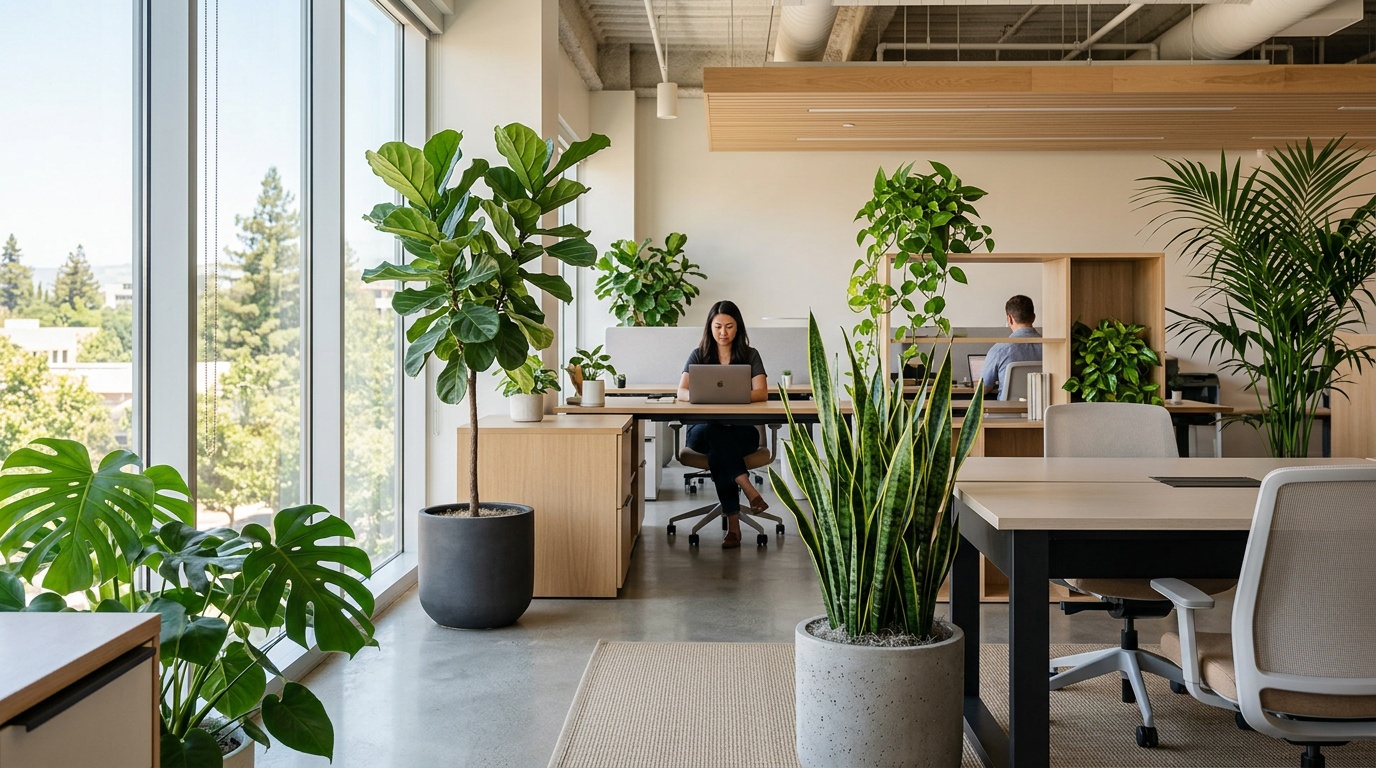
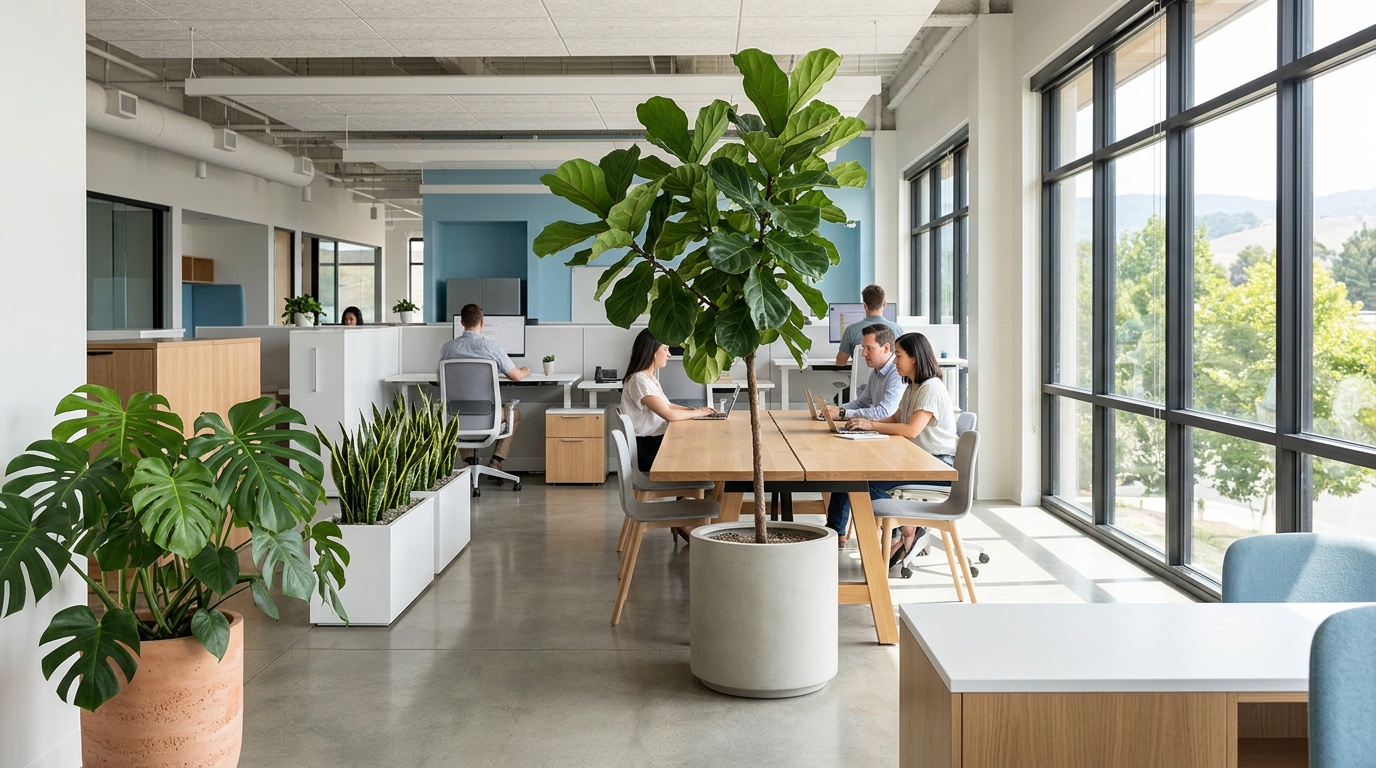
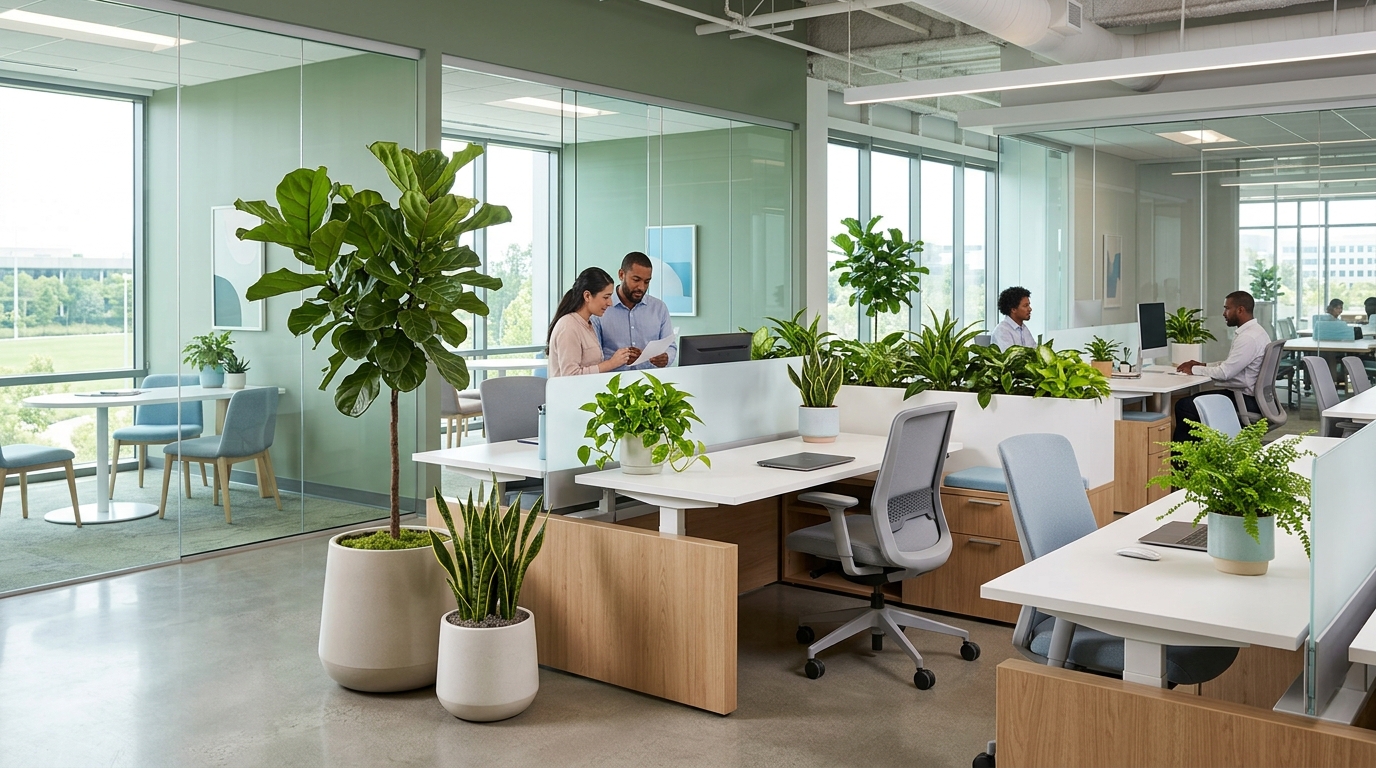
A useful comparison includes facilities labor, replacement exposure, and workplace changes, not only the initial payment. The final agreement depends on plant quantity, container style, service frequency, site conditions, and location.
| Consideration | Short-Term Rental | Ongoing Leasing | Outright Buying |
|---|---|---|---|
| Initial cash requirement | Usually limited to the project | Typically avoids a large purchase | Requires payment for plants and containers |
| Maintenance responsibility | May cover the rental period | Provider performs scheduled care | Business staff or contractor manages care |
| Replacement approach | Defined by the agreement | Defined by the service contract | Business pays directly |
| Best operational fit | Events and staging | Permanent offices | Organizations with in-house capability |
What Are the Upfront and Recurring Costs?
Buying can require an initial outlay for specimens, decorative planters, delivery, installation, potting materials, and placement labor. Leasing moves much of that expenditure into a recurring operating charge, which may make facilities budgeting more predictable.
Who Handles Maintenance and Replacement?
Professional maintenance may include moisture checks, leaf cleaning, pruning, pest inspection, and recommendations when light or airflow is unsuitable. Programs that include sustainable plant maintenance and guaranteed replacement can reduce unexpected replacement exposure.
Which Option Offers More Flexibility?
Leasing can help a business add plants after a renovation, remove them during consolidation, or coordinate a workplace move. Owned plants remain the organization’s responsibility during expansion or relocation.
What Is the True Cost Over Three Years?
A three-year review should include containers, delivery, installation, water, fertilizer, pest treatment, pruning tools, replacement specimens, and the labor needed to coordinate care. This broader view shows whether ownership remains economical after the first purchase or whether managed service better matches the business’s operating model.
What Does Ownership Cost Beyond the Purchase?
Ownership costs fall into acquisition, care, and risk. Acquisition covers plants, planters, installation materials, and placement labor. Care includes watering supplies, fertilizer, pruning, cleaning, pest monitoring, and staff administration. Risk includes plant loss, accidental damage, unsuitable conditions, and redesign after workplace changes. A typical midsize office replacing three or four specimen plants annually may spend hundreds of dollars per year on replacements alone.
How Can Leasing Make Spending More Predictable?
An ongoing commercial lease can place plant selection, containers, installation, scheduled visits, horticultural monitoring, pruning, foliage cleaning, pest response, and replacement terms within one service commitment. Confirm the scope in writing, including visit frequency, damage exclusions, relocation charges, notice requirements, and early termination language.
How Does Accounting Treatment Differ?
Accounting treatment can differ between a service lease and an outright purchase. Tax treatment depends on business use, contract structure, depreciation rules, and professional advice. Ask your accountant to review the proposal before making a decision.
Who Keeps Workplace Plants Healthy?
Plant failure affects more than horticulture in a client-facing workplace. Yellowing foliage, dry soil, fallen leaves, or empty planters can weaken the appearance of reception areas, conference rooms, and shared work areas. An ongoing commercial maintenance program assigns plant health responsibilities to trained personnel, with replacement terms defined in the agreement.
What Does Professional Maintenance Include?
Technicians may check moisture, inspect leaves and stems, prune, clean foliage, monitor pests, and review light, temperature, and airflow. Care should reflect the species and its location rather than follow one fixed routine.
What Happens When a Plant Declines?
A declining plant should be assessed before replacement. Low light, overwatering, dry air, temperature swings, pests, and physical damage require different responses. Under an ongoing leasing agreement, confirm when the provider replaces a plant and which conditions are excluded.
Why Might In-House Watering Fall Short?
Facilities teams manage access, safety, vendors, repairs, and employee requests. Plant care can be postponed during vacations, busy periods, office moves, or staffing changes. Scheduled commercial service creates accountability and documented routines.
Which Option Fits Your Business?
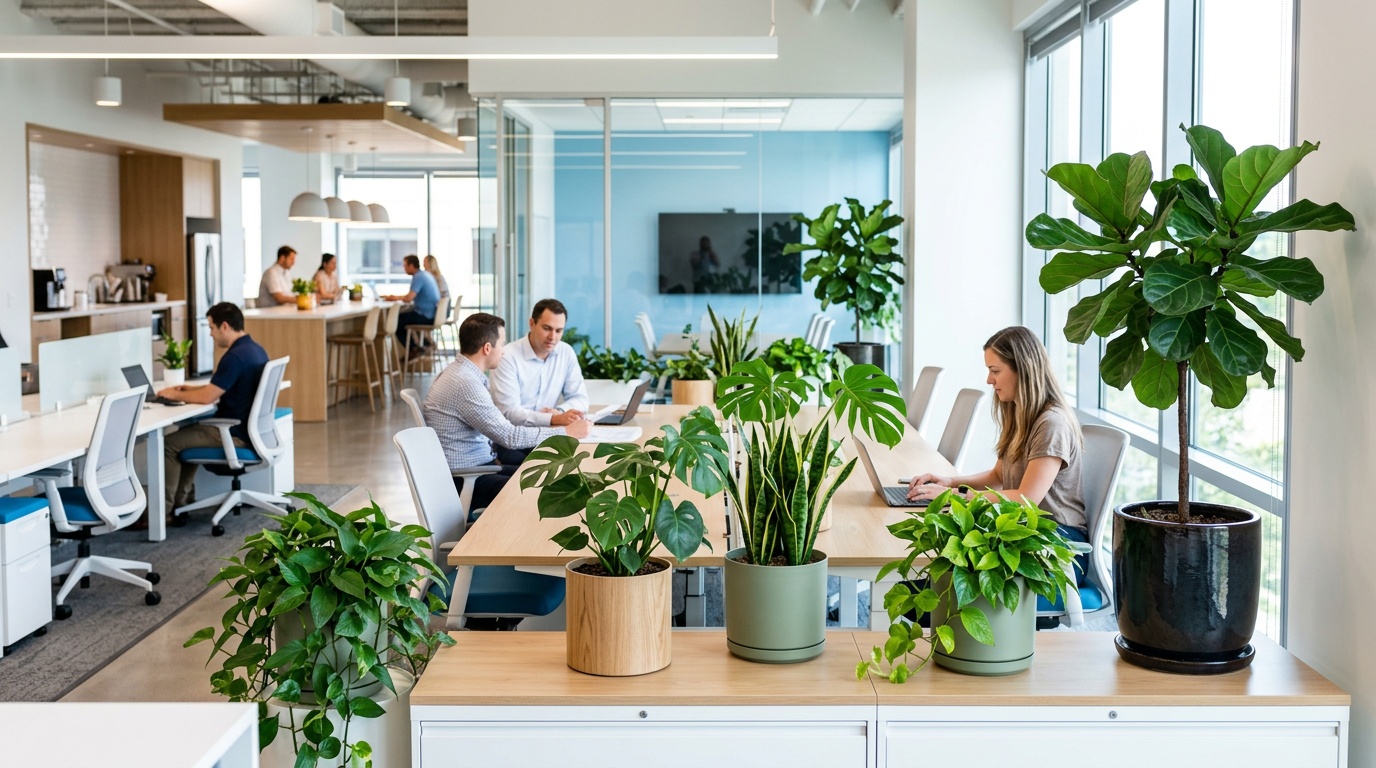
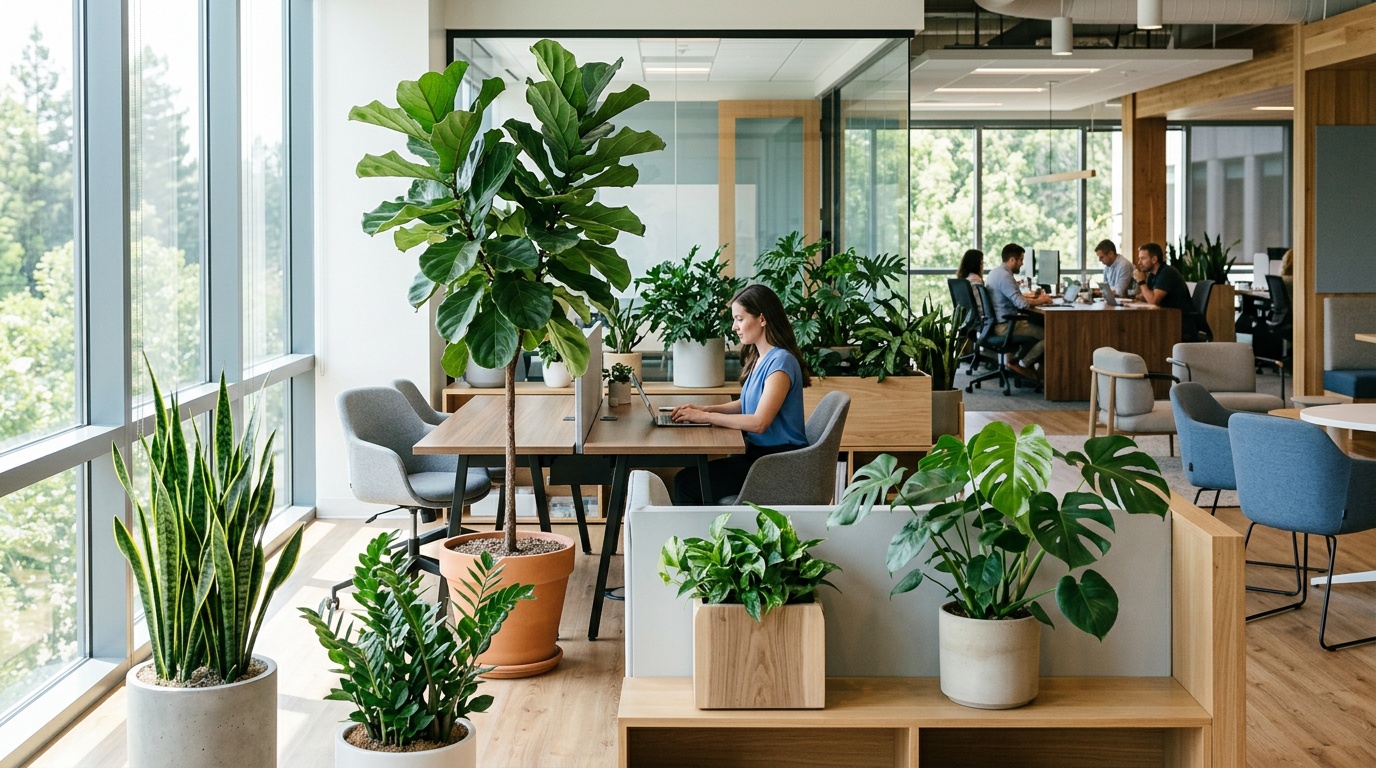
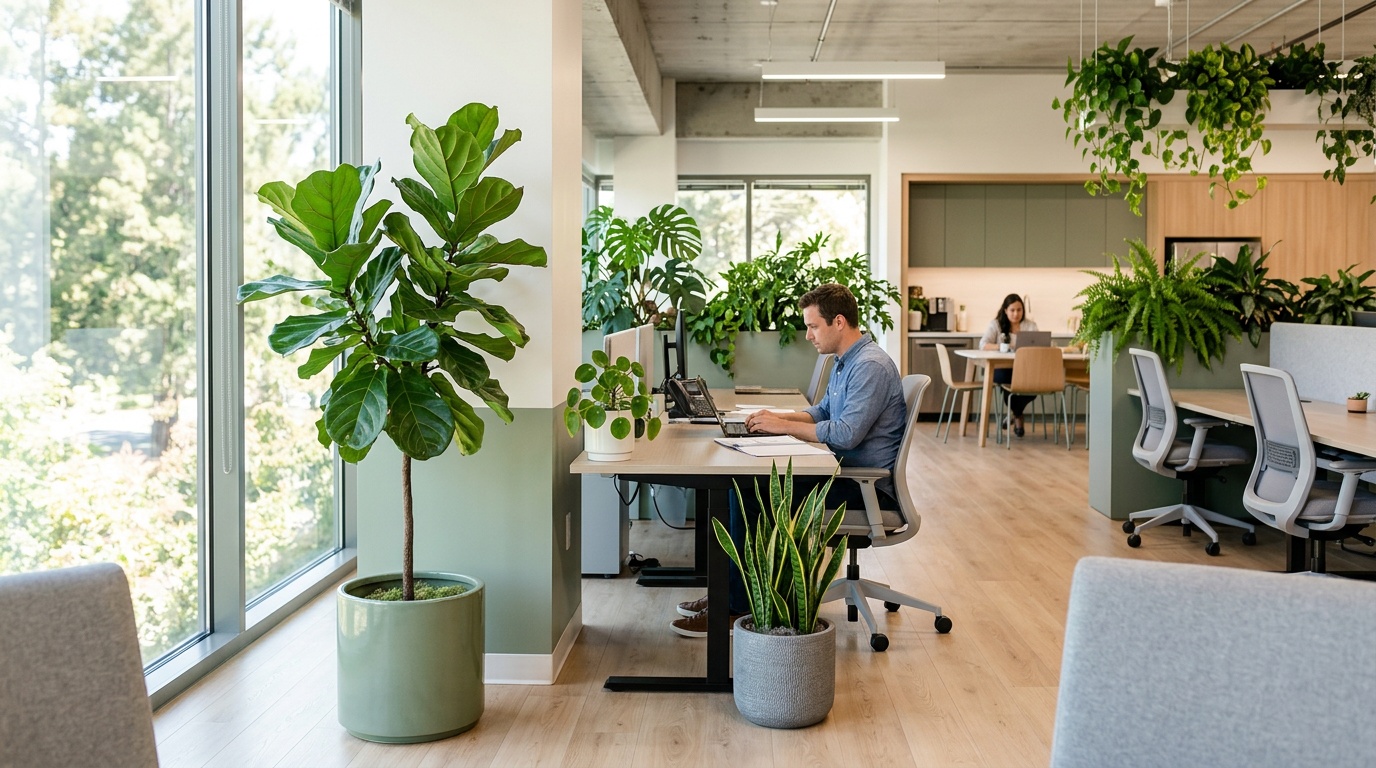
Begin with how your business operates. Review the budget cycle, staff capacity, lease horizon, lighting conditions, relocation plans, and expectations for appearance. A permanent office with client traffic and limited horticultural expertise may benefit from managed service, while a business with assigned horticultural staff may prefer ownership.
When Does Leasing Make Sense?
Leasing can suit facilities leaders who want one accountable partner for design, installation, scheduled care, monitoring, and replacement coordination. Confirm maintenance cadence, replacement provisions, damage exclusions, relocation support, notice periods, renewal terms, and early cancellation procedures.
When Does Buying Make Sense?
Outright purchase may suit an organization with assigned horticultural staff, reliable maintenance procedures, storage capacity, and a stable office footprint. Ownership provides control over assets, replacement timing, containers, and placement, but it also assigns responsibility for irrigation, pruning, fertilization, pest response, soil management, transport, and disposal.
Use this checklist before requesting proposals:
- Identify whether the installation is temporary, seasonal, or permanent.
- Assign responsibility for watering, pruning, pest inspection, cleaning, and replacement.
- Compare the full cost, including labor, supplies, plant loss, containers, and relocation.
- Review cancellation terms, notice requirements, renewal dates, and moving charges.
- Confirm that plant recommendations account for light, temperature, airflow, access, and safety.
Request a Free On-Site Consultation
Office Plants provides custom interior plant design and installation, plant leasing and maintenance, and plant sales for businesses in Berkeley, Brentwood, Burlingame, Concord, Cupertino, Davis, Dublin, Elk Grove, Fairfield, Folsom, Foster City, Emeryville, Fremont, Hayward, Lafayette, Livermore, Martinez, Menlo Park, Milpitas, Mountain View, Newark, Oakland, Orinda, Palo Alto, Pleasant Hill, Pleasanton, Rancho Cordova, Redwood City, Richmond, Roseville, Sacramento, San Carlos, Santa Clara, San Rafael, San Francisco, San Jose, San Mateo, San Ramon, Sunnyvale, Union City, Vacaville, Vallejo, and Walnut Creek. Request a custom design proposal tailored to your workplace.